Partial Solar Eclipse
Yesterday in Margate people started gathering around 6pm. My partner Lou and I set off from our place in Cliftonville with a trolly loaded with tripods and a telescope. Two cameras were poorly packed into two camera bags each with the longest lenses we had.
Despite my belief in being prepared the cracks started showing around 11am that day. As I checked the telescope I noticed both eyecups on the eyepieces has perished and fallen off. Thankfully we have a 3d printer so I designed a replacement in Blender and printed two with a soft rubbery filament, they fitted well enough for tonights viewing so it was back on track.
Or at least that’s what I thought, ten minutes before leaving I was packing up and I realised I had not made the Baader solar filters I wanted to use to photograph the eclipse (I actually had but couldnt find them)… I hastily cleared a space on the table to cut out two squares of film and glue them into the Lee filter frames I had. Once I had peeled my fingers off the superglued frames I threw everything into bags and set off.
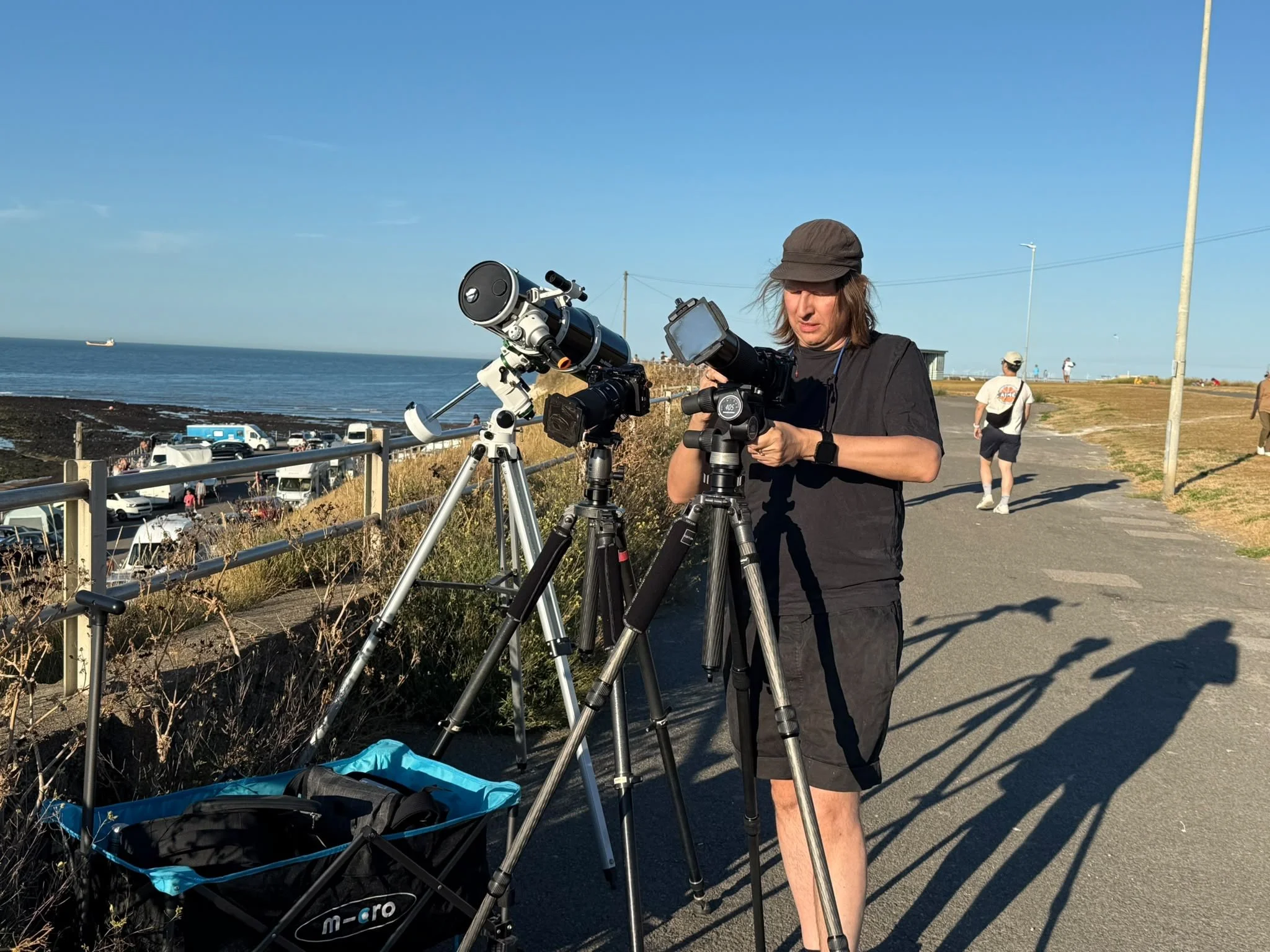
We found a spot along the coast which has a good eye line to the sun and set up our cameras and telescope, before we could get started the first people started to comment on our equipment. We hadn’t thought of making our viewing a community event but from the interest we realised how fun it would be if we let people look at the Solar event. I have used my homemade filters a lot and the telescope is permanently set up at our studio and regularly used to look at sun spots so I was confident everyones eyes would be safe.
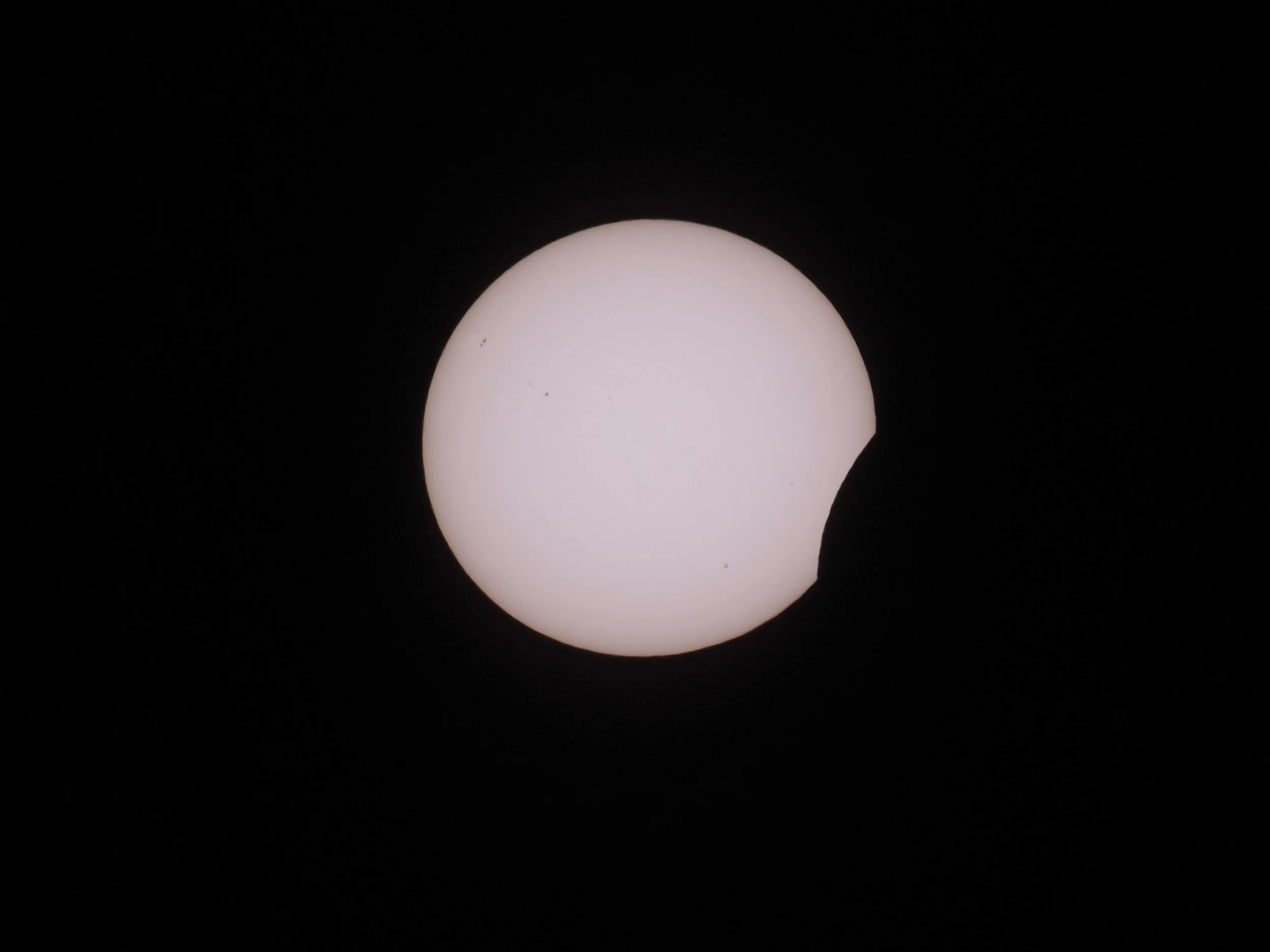
By the time I had set up the moon had already started to cross the surface of the sun. This was shot using the Baader Solar filter so it attenuates all visible light wavelengths evenly, revealing the star's true, unfiltered color. You can see the few sunspots scattered across the sun.
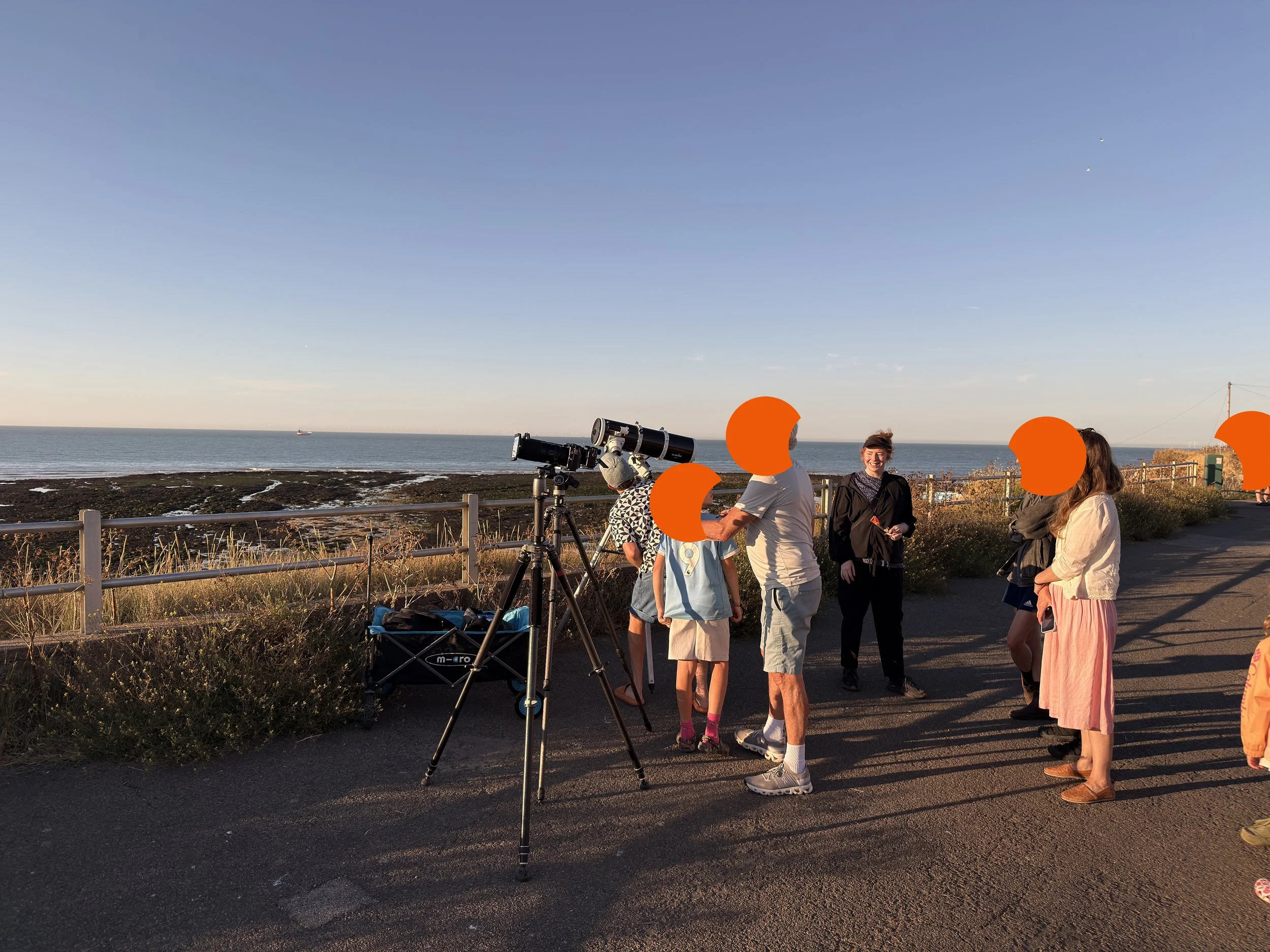
Solar eclipses used to preserve the anonymity of the passers by.
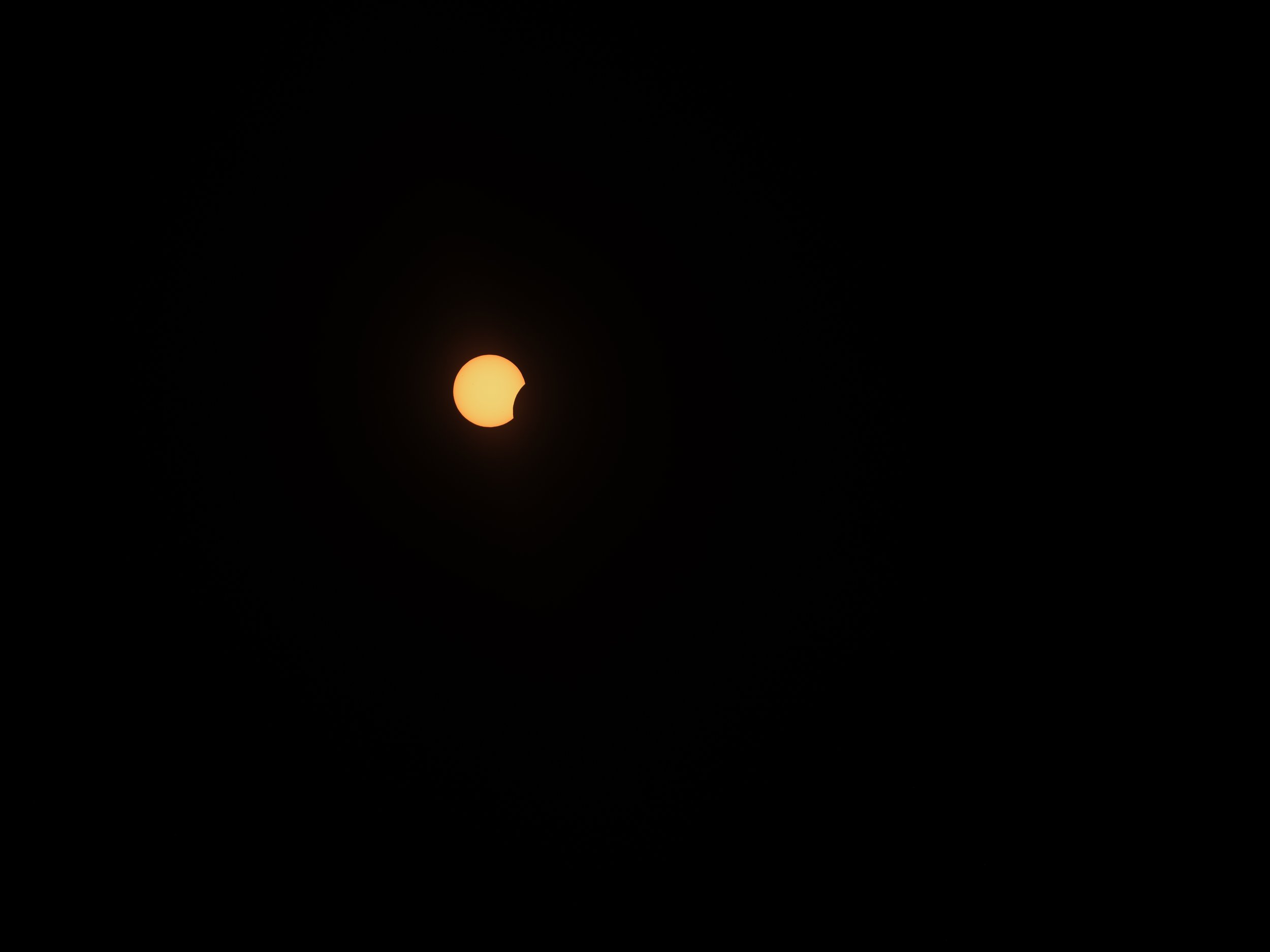
I have cropped some of the other images as despite having quite long lenses (280mm and 400mm) you can see the sun is still relatively small in the frame. This is uncropped and thanks to the Fujifilm GFX’s 102 megapixels I can still crop in to see more detail on the screen.
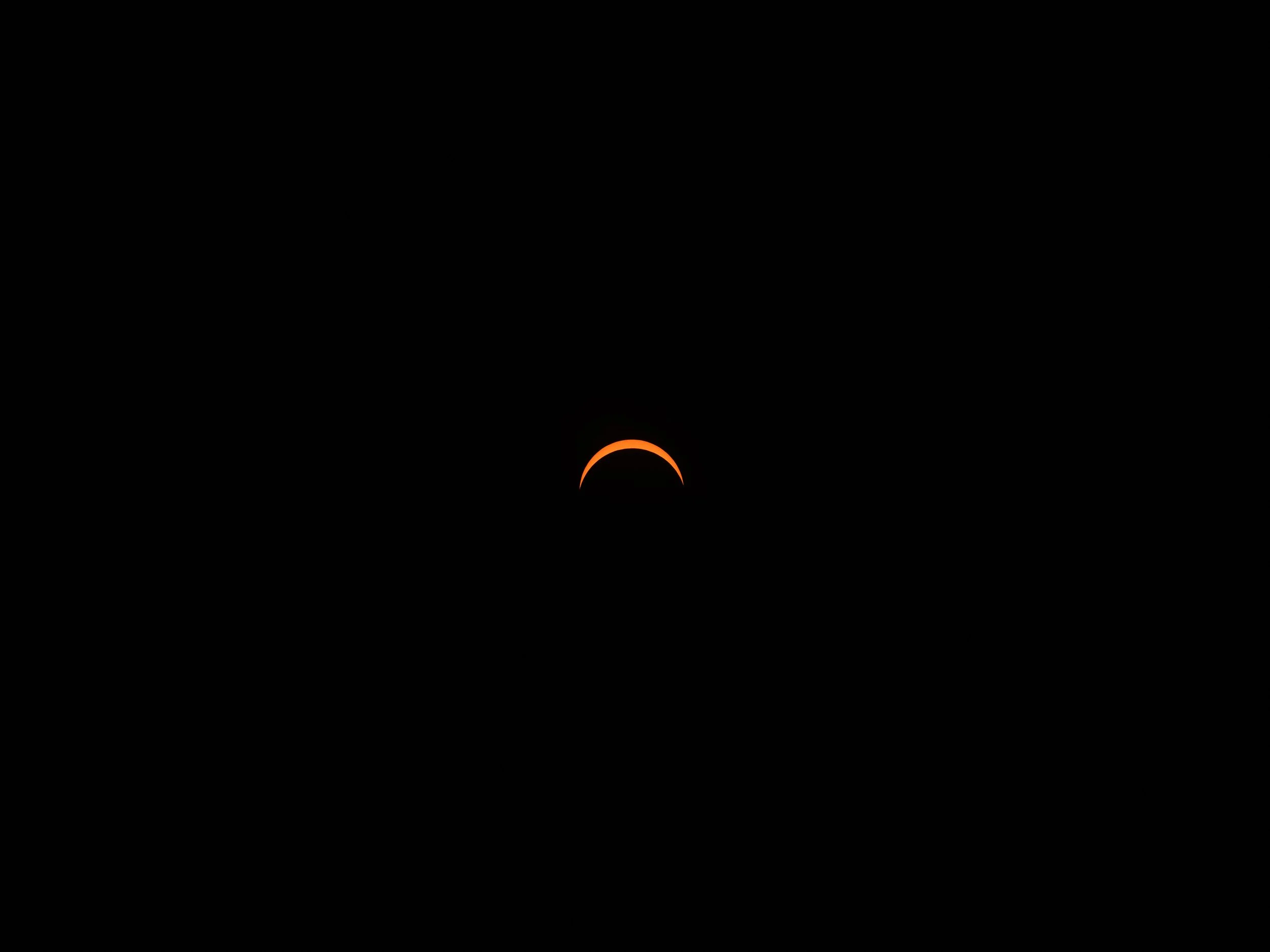
A perfect circle.
This is the eclipse at the maximum partial eclipse, it was great to be able to share this experience with all the people who passed by. The sky we live beneath and the celestial objects which hang in it created such a strong connection between everyone on earth. We opened our telescope to everyone from the local kids who were witnessing the eclipse for the first time to the people like Lou and I who remembered the eclipse of 1999 and back to the older generation who were there for it in the 60’s. We as many of the other people who passed by will remember this moment and hopefully it will remind everyone how connected we are.
Equipment:
Fujifilm GFX 100S with Baader planetarium solar filter
Iso: 100iso
Aperture: f11
Shutter: around 1/60s on a tripod
Lens: 200mm lens +1.4 tele adapter making it 280mm
Fujifilm GFX 100Sii with Explore Scientific Solaris Solar filter.
Iso: 100iso \
Aperture: f11
Shutter: around +1/60s on a tripod
Lens: 400mm Pentax A 645 lens with Kipon adaptor.
Skywatcher 190 with Baader solar filter